Mohammad Samir Hossain is a researcher, author, educator, and former physician whose lifelong interest has been understanding how human beings make sense of life, loss, and existence. His work combines scientific reasoning with careful personal reflection, seeking practical explanations for some of life’s most difficult psychological questions. His best-known work, Death and Adjustment Hypotheses, has received international recognition and continues to evolve as a comprehensive conceptual framework for understanding human adjustment to death and mortality.
Born in Dhaka, Bangladesh, Samir was the third child of Mohammad Manjur Hossain and Rezia Begum. From early childhood, he was an unusually thoughtful and sensitive observer of life. Some of his earliest memories are of quietly sitting alone by a window or lying awake wondering where his parents were, accompanied by an intense fear of losing them. While many childhood fears gradually disappear, this one remained with him for more than three decades and quietly influenced the way he viewed life, relationships, and the future.
Samir studied medicine and spent over twelve years working as a physician and psychiatry teacher. During those years, he cared for patients, taught medical students, and developed an enduring interest in the psychological foundations of human behaviour. Although medicine provided him with scientific training, many of the questions that fascinated him extended beyond diagnosis and treatment, leading him toward broader reflection on meaning, identity, and human adaptation.
The defining turning point in his life came through personal loss. Following the death of his elder son, Mohammad Seeyam Samir, and later the prolonged illnesses and passing of both of his parents, Samir found himself confronting the very fear that had accompanied him since childhood. Rather than turning away from these experiences, he chose to examine them with the same honesty and curiosity that had shaped his life from the beginning. Just three days after his son’s death, he resumed writing, beginning a journey that would eventually develop into the Death and Adjustment Hypotheses. His mother’s final month of life became an especially profound period of observation and reflection, allowing him to witness the process of dying with both scientific curiosity and personal compassion.
Around the same period, changing social circumstances in Bangladesh led him to voluntarily retire from medical practice. After a brief period teaching English, he and his family made the difficult decision to begin a new chapter in New Zealand. Like many migrants, the transition required rebuilding both career and identity while adapting to a different culture and society.
Today, Samir lives in New Zealand, where he works in healthcare education while continuing his research and writing. Although his professional roles have changed over the years—from physician to educator and researcher—the underlying purpose has remained remarkably consistent: to understand human experience honestly and to develop ideas that may help others navigate life’s deepest challenges.
Samir is married to Dr. Tahmina Rahman Chowdhury (Teena), also a physician. Their younger son, Mohammad Raiyan Samir, is growing up and pursuing his education in New Zealand. As a family, they remain grateful to the Creator and to New Zealand for providing the opportunity to begin again and build a peaceful life.
Above all, Samir sees himself not as someone who has found all the answers, but as someone who has spent a lifetime asking difficult questions with sincerity, curiosity, and hope that careful reflection may contribute, even in a small way, to a better understanding of what it means to be human.
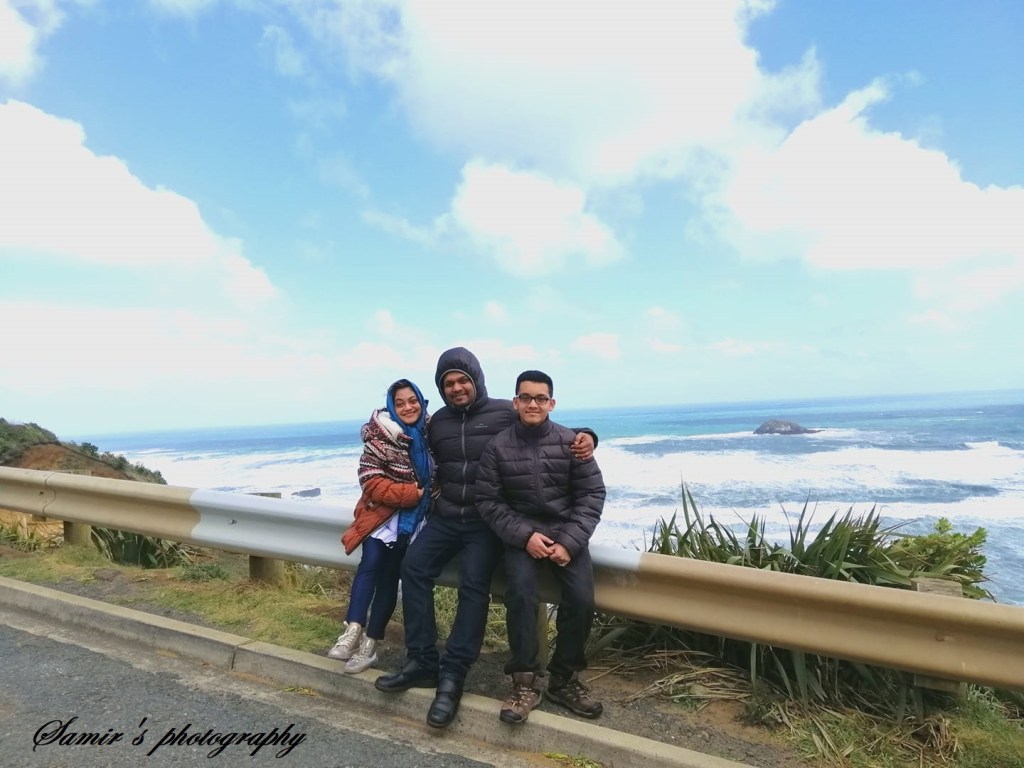
Although he now resides in New Zealand, Samir remains deeply connected to his motherland. He continues to write in Bangla on this website and the webpage ত্রিভুজ, alongside his childhood friends. His pre-New Zealand writings are published internationally, and the easiest way to explore them is by searching Mohammad Samir Hossain

